This is a presentation of what we learned from our research - conversations with SENCOs, teachers, and teaching assistants across English primary schools about how inclusion really works, where it breaks down, and what they wish existed. What we've built is a direct response to what they told us.
Observations, emotional check-ins, session notes, moments of breakthrough or struggle. That information takes many forms - handwritten notes on post-its, jottings in lesson plan margins, a quick message to the SENCO, a corridor conversation.
In a busy school day, there is rarely a moment to convert those insights into records. Through no lack of care or commitment, that information stays hidden - observed but not captured, captured but not connected.
Teaching assistants hold some of the most intimate, consistent knowledge of any learner in the school - the one who withdrew on Tuesday, the one who finally connected with a peer on Thursday. None of it is captured in a way that builds a coherent narrative. It stays in memory - until it's lost.
Teachers carry detailed knowledge of how their SEND pupils are doing - academically, socially, emotionally - but have no efficient way to record it, share it, or connect it to the formal plan.
With caseloads of 30, 40, or 50+ students, maintaining the APDR cycle meaningfully is close to impossible. Plans are produced from templates rather than from a living, continuously updated picture of the learner.

This is what the full Hero Inclusion loop looks like - from the moment an observation happens, through to the review, and back into the classroom.
A TA notices something important. Amir joined the group for the first time in three weeks. A teacher spots that Zara is struggling since the timetable changed. These moments happen every day - written on post-its, scribbled in margins, or held in memory until they're lost.
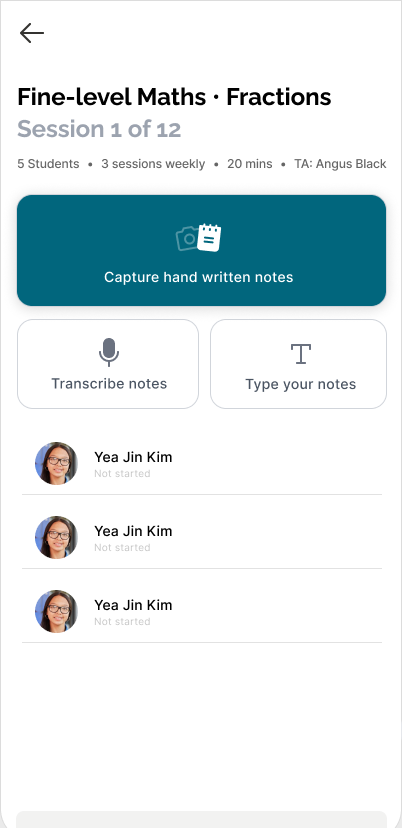
Open the Capture App. Take a photo of the handwritten note, speak a voice memo, or type a quick observation. AI structures it instantly - linking it to the right learner, the right outcome, the right date. Done in under a minute. No portal logins. No re-typing later.
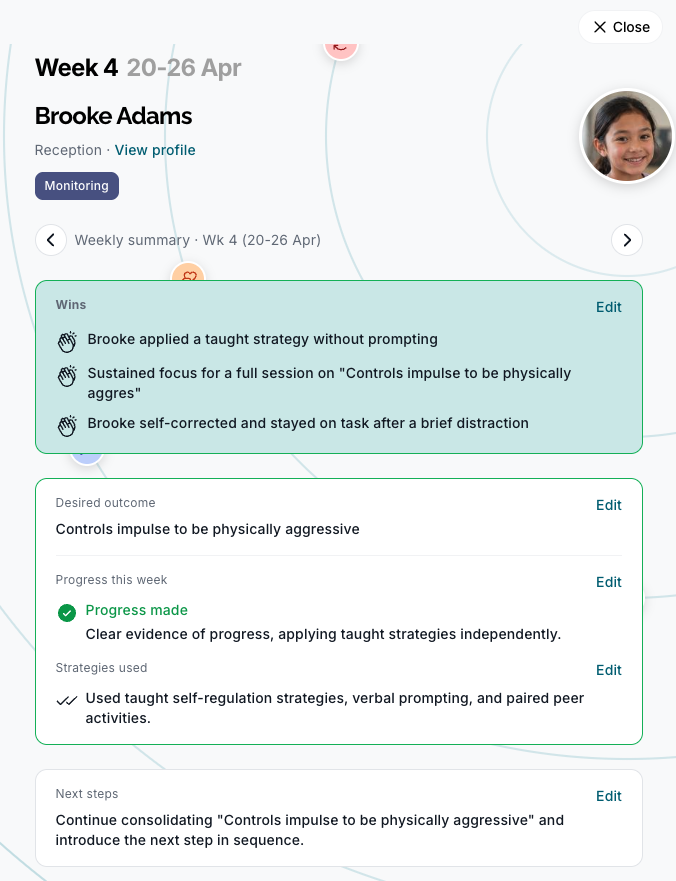
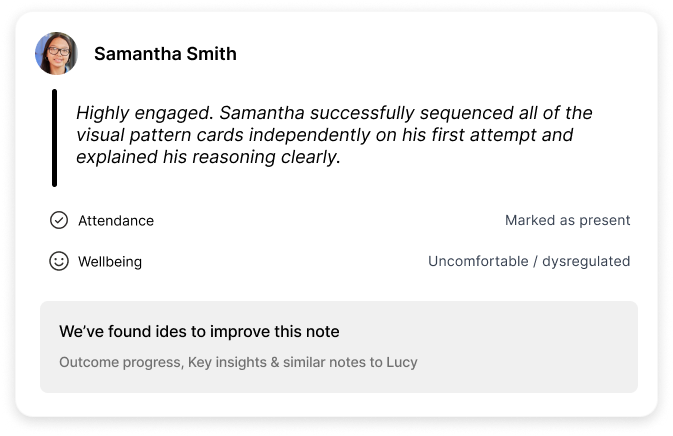
As captures arrive across the week - from TAs, teachers, even forwarded emails from parents - Hero Inclusion assembles them into a weekly summary for each learner. Patterns surface. Progress against outcomes is tracked automatically. The SENCO sees it all without asking for it.
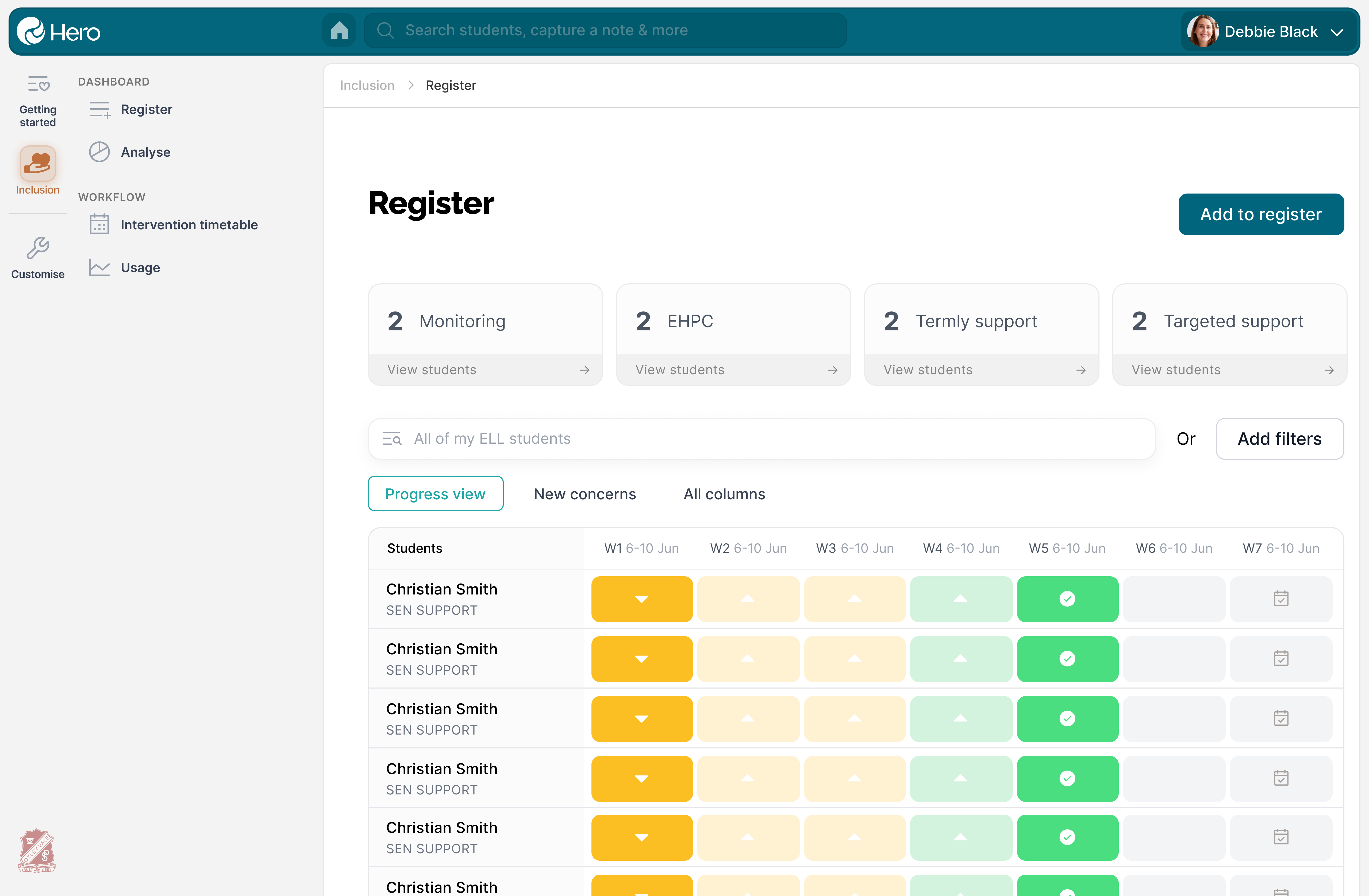
The Inclusion Hub gives the SENCO a dashboard of every learner - who is progressing, whose review is coming up, where gaps are emerging. Not assembled from spreadsheets the night before. Updated continuously, from the work that's already happening.
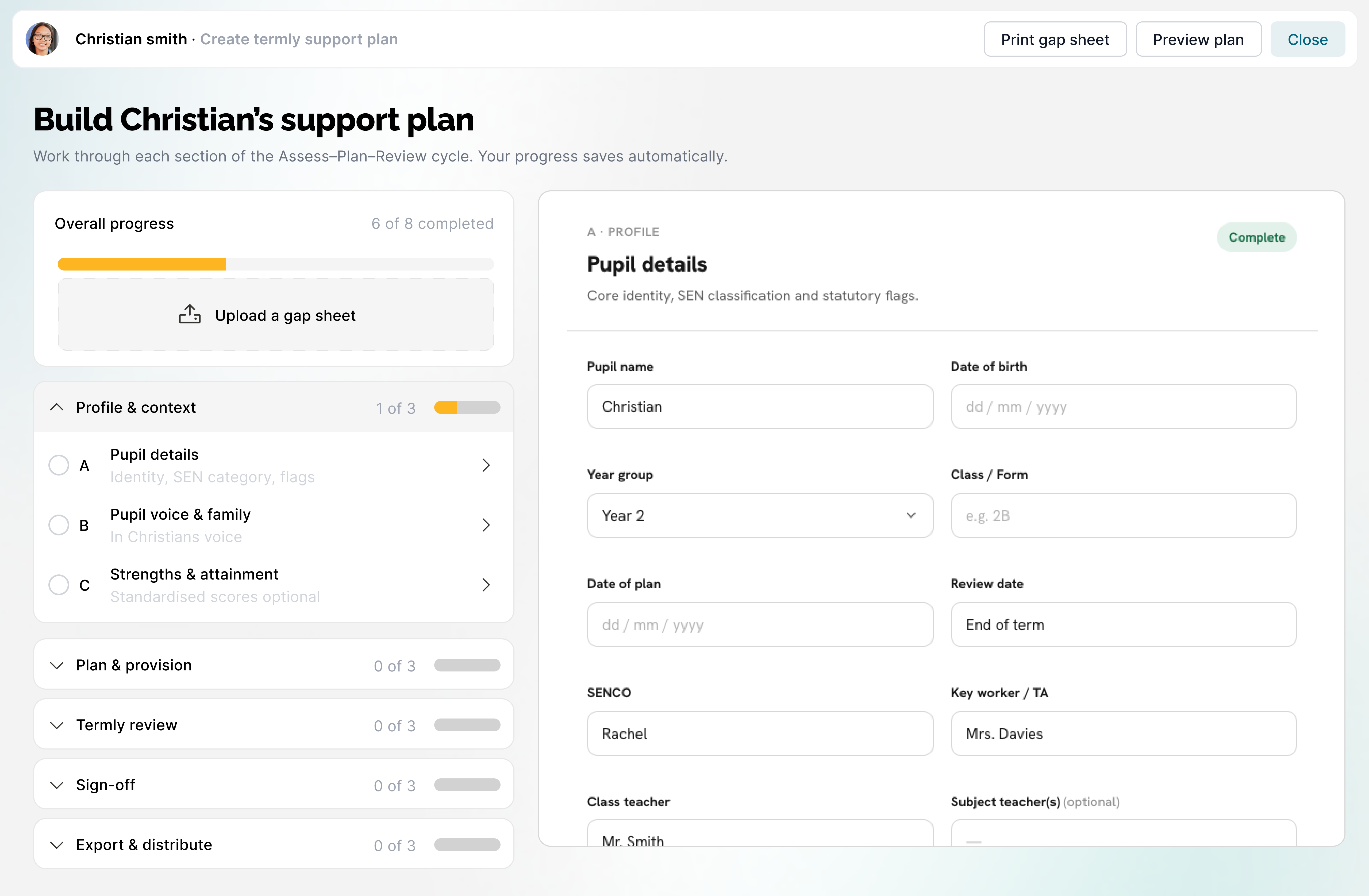
When review time comes, the evidence is already there. Hero Inclusion drafts the termly plan or ISP from the accumulated weekly summaries - formatted to the right template, linked to the learner's outcomes, ready to share with parents. A review that used to take a full evening takes twenty minutes.
A new intervention starts. The TA working with Amir captures what she sees - the moments of hesitation, the small steps forward, the strategies that work and the ones that don't. Each observation lands in the record automatically. Nothing is lost this time.
Week by week, the picture of each learner becomes richer. The SENCO can see which outcomes are moving. Teachers can see whether their strategies are working. Parents receive updates that reflect what's actually happening - not just what was written in a review six months ago.
Amir has been engaging consistently for six weeks. The evidence is all there - captured in the moment by the people who were with him. The SENCO can share it with his parents, present it to governors, or use it to make the case for continued support. Nobody had to chase anyone. Nothing had to be assembled at the last minute.
Purpose-built for SEND and inclusion management in English primary schools. Working alongside Arbor, BromCom, and every MIS you already use.